
Fentress County Court Record Requests
Name the court, not just the county. That single detail routes a Fentress County court record request to the right desk. The Fentress County Circuit Court Clerk keeps Circuit, Criminal, Juvenile, and General Sessions files. Chancery suits, probate, wills, and estates belong to the Clerk and Master. Jamestown ordinance and city-traffic cases stay with the City Court Clerk. The elected County Clerk handles vehicles and marriages, not these court case records.
Fentress County publishes no working local docket or document-search link on an official page. TennesseeCaseFinder serves participating clerk offices. Fentress participation there is not listed. The Tennessee Public Case History portal covers appellate courts only, not the county trial docket. Use these direct channels:
- Identify the court, case number or case style, approximate year, and exact record needed.
- Call the correct clerk to confirm custody, public status, format, current fee, and delivery choices.
- Inspect the file at the clerk counter, or submit a focused request by mail, email, or fax if the clerk accepts that route.
- Use the county Public Records Request Form when a written county request is useful or required, selecting inspection, copies, and delivery.
- Pay the quoted charge and specify whether a plain, certified, or exemplified copy is needed.
For an appellate matter, Tennessee Public Case History can show milestones and permitted PDFs. The underlying Fentress County court record still sits with the trial clerk. A wider case-locating workflow runs through the Fentress County docket search.
Two Fentress County Record Counters
Split custody is the biggest routing trap. Gina Mullinix's Circuit Court Clerk office sits at the Justice Center. It holds Circuit, Criminal, Juvenile, and General Sessions records. Linda Smith's Clerk and Master office, in the same complex, holds Chancery and probate files. Send a probate request to the Circuit Court Clerk and it will bounce. Send a General Sessions request to the Clerk and Master and the same thing happens. Neither office can do the other's work. Those misroutes cost days.
The Fentress County government homepage is the official path to county offices and records materials. The county's own directory is where court access begins. That is exactly what the county page reflects.
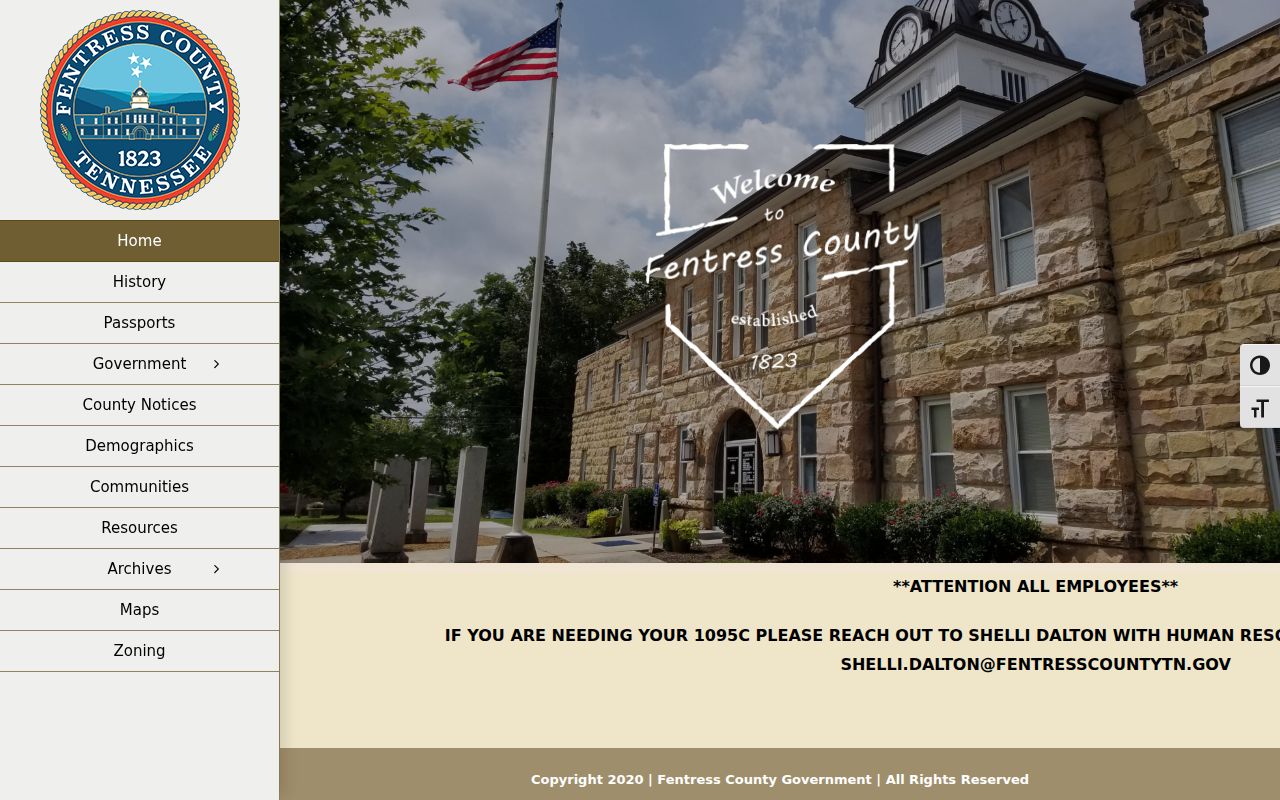
Put the custodian's name on any written request. For Circuit, Criminal, General Sessions, or Juvenile files, use Suite 126 at 140 Justice Center Drive, Jamestown, TN 38556, phone 931-879-7919, fax 931-879-3014, or gina.mullinix@tncourts.gov. Chancery and probate go to Suite 110, phone 931-879-8615, fax 931-879-4236, or linda.smith@tncourts.gov.
Fentress County Circuit Court Clerk
140 Justice Center Drive, Suite 126
Jamestown, TN 38556
931-879-7919
Fentress County Clerk and Master
140 Justice Center Drive, Suite 110
Jamestown, TN 38556
931-879-8615
Kinds of Court Records
A docket is a chronological index, nothing more. The full court case record includes the papers those entries point to. Ask for the smallest product that answers the question. "The whole file" can mean stored paper, redaction review, staff labor, and a bigger bill.
- A docket or register showing filings, settings, orders, and case events.
- A complaint, indictment, petition, answer, motion, notice, or other filed pleading.
- A signed order, judgment, disposition, or sentencing document.
- A Chancery litigation, probate, will, or estate record held by the Clerk and Master.
- An exhibit still in court custody or a transcript ordered through the court-reporter route.
A transcript is not the docket. Its price is not part of a docket-copy fee either. Give the clerk the hearing date and the proceeding, then ask who reported it. Exhibits are another trap. An item listed on a docket may be sealed, returned, archived, or under a protective order. The entry alone never proves the thing itself is open.
Fentress County Request Form Fields
The county's one-page Public Records Request Form is short but specific. It asks who should receive the request. It also asks for the requester's contact details, Tennessee-citizen status, and whether the person wants inspection or copies. The form covers cost and delivery too. It asks whether a cost estimate below a stated ceiling is waived. It also asks whether delivery should be pickup, USPS First-Class Mail, electronic, or another method.
There is no dedicated case-number box. So the description field has to carry the load. List the court, case number, case style, year or date range, and the exact filing. "All records about a case" works far worse than "current docket and the signed judgment entered on the stated date." A tight description helps in another way. It lets the custodian estimate redaction, copying, postage, and retrieval work up front.
- Docket
- The chronological register of filings, settings, orders, and events.
- Plain copy
- A reproduction for reading or reference without clerk authentication.
- Certified copy
- A clerk-authenticated copy used when an official court-stamped record is required.
- Exemplified copy
- A more formal authentication whose availability and fee must be confirmed with the issuing clerk.
Electronic delivery is just a delivery preference. It does not mean Fentress County allows public e-filing or accepts a pleading sent by email.
Court Records: What They Contain
Exact contents turn on court type and access rules. A public Fentress County court record typically opens with identifying fields and a docket chronology, then points toward the documents themselves. Case-number formats differ locally. Never invent punctuation or a prefix; copy the identifier exactly as the clerk or court notice shows it.
| Case Number | The court-assigned identifier, reproduced exactly from the source. |
|---|---|
| Case Style | The caption that names the parties. |
| Docket Sheet | Dated entries for filings, settings, rulings, resets, and disposition. |
| Pleadings | Complaints, petitions, charging papers, answers, motions, and notices filed in the matter. |
| Orders & Judgments | Signed rulings and the formal result. These control over a short docket label. |
| Exhibits & Transcripts | Separate items whose custody, restriction, and order process require confirmation. |
An online screen or a plain clerk printout is only an index unless certified. When the exact outcome matters, ask for the signed judgment or order. A brief "disposed" label is not a result.
Older Fentress County Case Files
Older Fentress County case files often sit outside the electronic docket index. The record you want can hide in many places. A paper volume, a bound register, or a scanned image with no public viewer can hold it. So can a file kept by a different clerk. Give the court a year, even a rough one. Then ask whether staff can check an index volume or the archive for you. The case number may be unknown. If so, include the case style and describe the exact paper you need.
Before paying for a large copy order, ask a simple question. Ask whether you can inspect the file at the counter. Under the Eighth Judicial District criminal rules, court papers stay under the clerk's strict control. Inspection happens in the clerk's office, and nothing leaves without consent. So public access in Fentress County means supervised review or a clerk-made copy. Never count on taking the original file home.
One more caution on timelines. The county policy keeps request correspondence for at least twelve months. But that is not a full court-file retention schedule. Ask about your item's format. Is it a current register, archived file, microfilm, scanned image, or original exhibit? Find out before you count on it still existing.
Note: A missing electronic result can reflect age, custody, indexing, or restriction and does not establish that no case exists.
Copy Fees and Certification
Fentress County's public-record policy lists general reproduction rates, but it sets no certified-copy schedule for court records. The per-page charge may not cover certification, exemplification, an archive search, or a transcript. Ask the issuing clerk for a quote first, and confirm what payment the office takes before you mail any funds.
| Item | Published Amount or Status |
|---|---|
| Inspection of an open record | $0 |
| Black-and-white letter/legal copy | $0.15 per page under county policy |
| Color letter/legal copy | $0.50 per page under county policy |
| Labor beyond one hour | May be charged; local hourly rate not published |
| Copies totaling under $5 | No duplication cost under county policy |
| Certified or exemplified court copy | Confirm with the custodian |
Add-ons are possible. Actual vendor cost and USPS postage can be tacked on. The policy demands advance payment once the expected cost exceeds $5, listing cash or personal check. A separate $5 archives and records-management fee also exists. It applies to certain public records filed with specified court clerks to start legal proceedings. That fee is not a blanket docket-printout or certification charge. Do not treat it as one.
Fentress County Response Timeline
The county policy draws a line between request types. Inspection-only requests cannot be forced into writing. Copy or inspection-and-copy requests may require the county form. Tennessee citizens may need to show a valid Tennessee driver license. Another accepted ID can serve as proof of citizenship. Ask the court custodian how the policy applies to your particular file.
If the record cannot be handed over promptly, a seven-business-day path kicks in. The office must produce it. It can deny the request in writing with a stated basis, or give a reasonable production time. Big requests can be split into segments. When only part of a file is confidential, the custodian should hand over a redacted copy where possible. The custodian should also name the general legal ground for each redaction.
For the full framework, the Office of Open Records Counsel FAQ walks through state rules on access, specificity, timing, and fees as the official guidance presented here lays out.
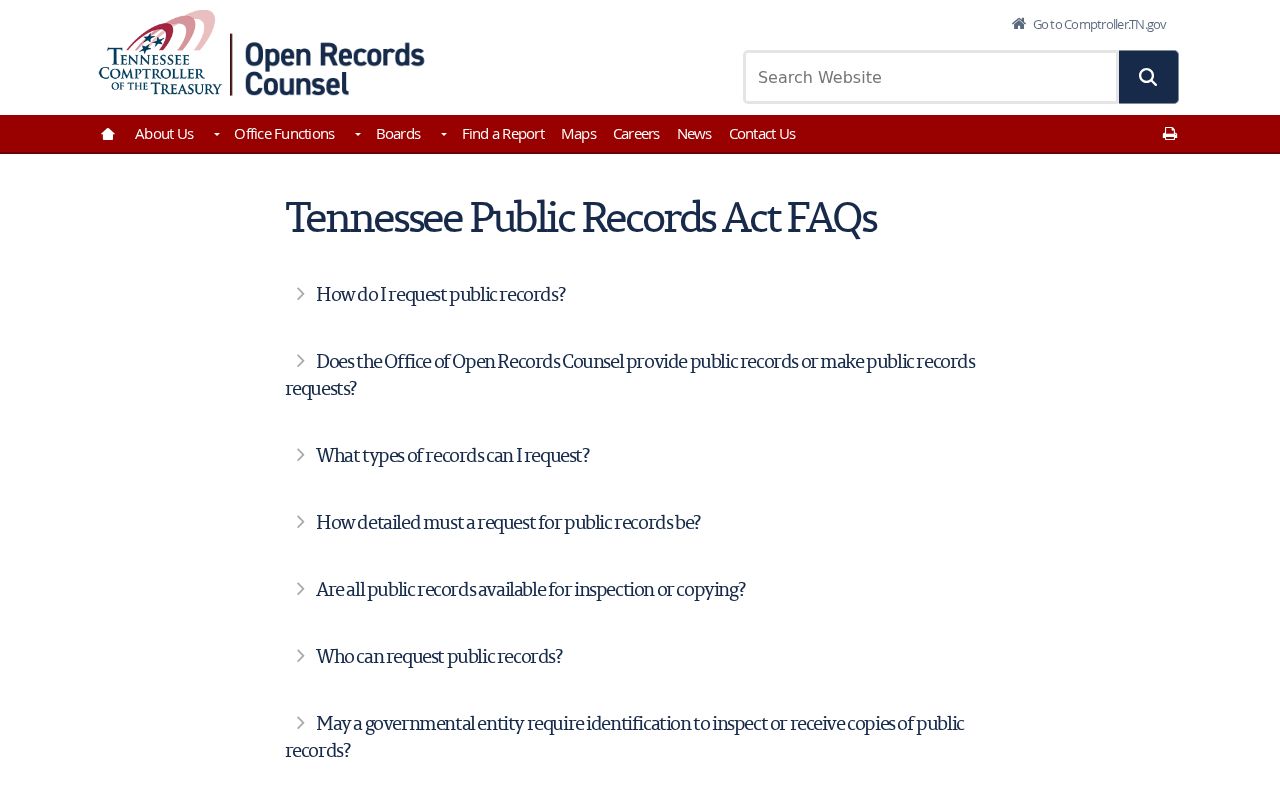
That state guidance backs a precise request for a record that already exists. It does not obligate staff to build a new chronology, write a legal analysis, or draft a custom summary for you.
Access Rules for Court Records
Access to court records in Fentress County rests on two pillars. One is the Tennessee Public Records Act. The other is Tennessee Supreme Court Rule 34. Both favor inspection. Statutes, court rules, protective orders, and sealing orders can close the door. Juvenile Rule 114 shuts dependency and neglect proceedings. Delinquency or unruly proceedings may close too once the rule's required findings are made. Adoption, expunged, sealed, and protected material carries its own limits.
The official Rule 34 page, presented here, sorts records into public case records, confidential material, and internal court records.
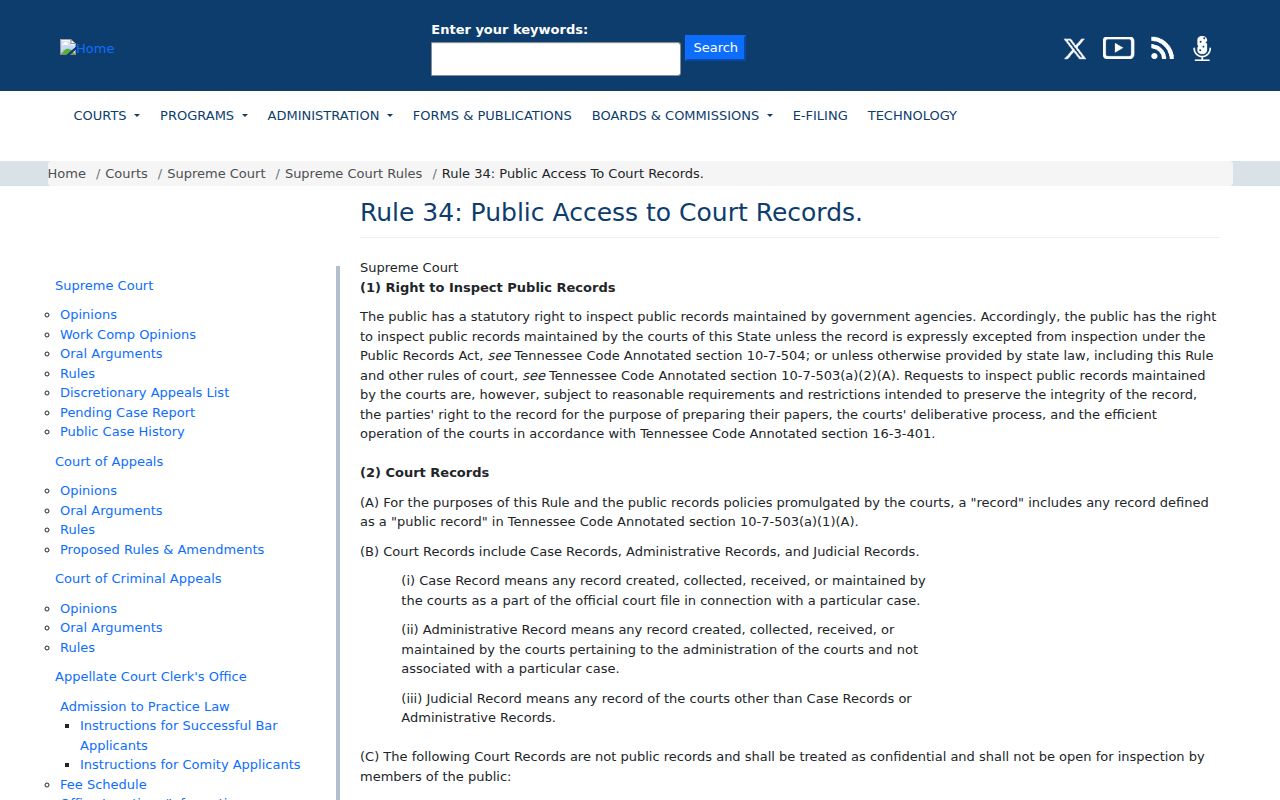
When access is limited, ask for the public docket shell or a redacted copy, plus the general legal basis for withholding. Never try to get around a sealing or protective order.
Key access authorities:
T.C.A. §10-7-503 guidance explains access, specificity, response, inspection, and fee rules.
Tennessee Supreme Court Rule 34 presumes access to public court records while preserving legal exceptions.
Juvenile Rule 114 governs confidentiality and closure in juvenile proceedings.
Fentress County Records Coordinator Route
A formal county request goes to the Public Records Request Coordinator, Shelli Dalton, P.O. Box 1346, Jamestown, TN 38556. Phone 931-879-3010, fax 931-879-3012, or email shelli.dalton@fentresscountytn.gov. The coordinator routes requests for county-held records. For a court case record, still name the court clerk who holds the file, because that office, not the coordinator, controls the docket.
Tennessee's official records-contact guidance, presented here, lays out how the coordinator framework works statewide.
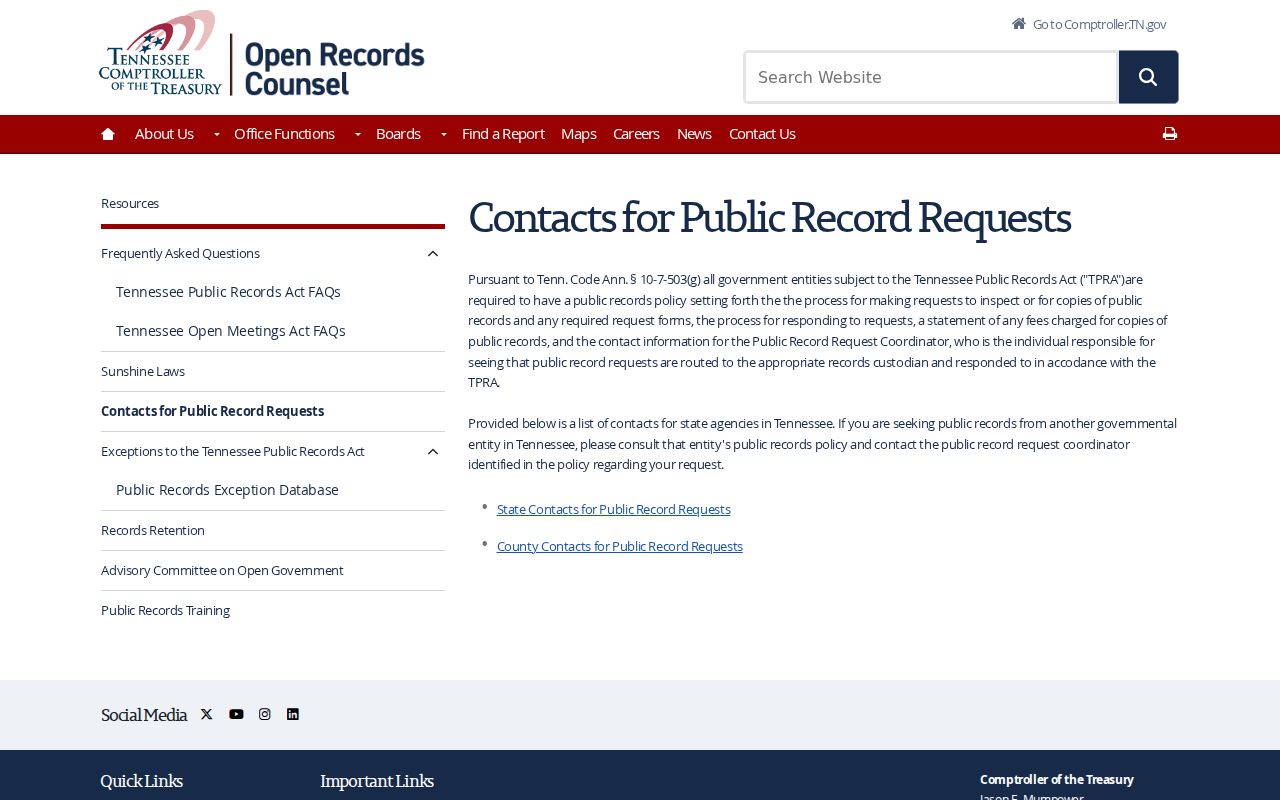
Denied? Ask the custodian first. Ask for the statute, rule, order, or custody reason behind it. T.C.A. §10-7-505 then gives a Tennessee citizen a judicial review route in Chancery or Circuit Court. That review stands apart from any appeal deadline or motion in the underlying case. Keep the two tracks straight.
Note: Name the exact court and document even when the county coordinator routes the request, since split custody remains decisive.